Quartz vs. Porcelain Countertops: Which One Should You Choose?
When homeowners start planning a kitchen renovation, two materials keep appearing on showroom floors: quartz and porcelain.
Both look beautiful. Both promise durability. Both come in dozens of styles.
But they behave very differently in real kitchens. If you’re investing thousands of dollars into countertops, it’s worth understanding what you’re actually buying.
Let’s break it down.
What Quartz Countertops Are
Quartz countertops are engineered stone surfaces made from crushed natural quartz mixed with resin and pigments.
This process creates a non-porous surface that resists stains and bacteria without needing sealing.
Why homeowners choose quartz
-
Extremely stain resistant
-
Non-porous and hygienic
-
Huge variety of colours and patterns
-
Very consistent appearance from slab to slab
Potential drawbacks
-
Resin can be damaged by extreme heat
-
Not recommended for outdoor kitchens
-
Slightly more expensive in many markets
What Porcelain Countertops Are
Porcelain countertops are made from natural clay and minerals fired at extremely high temperatures.
That process creates a very dense surface that resists heat, scratches, and UV exposure.
Why porcelain is gaining popularity
-
Excellent heat resistance
-
Extremely hard and scratch resistant
-
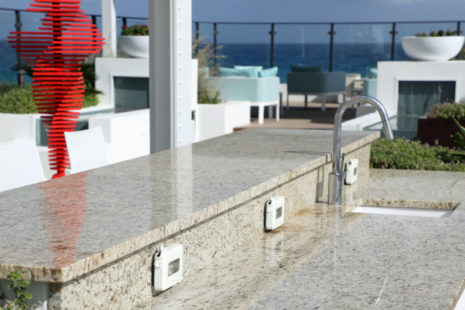
UV resistant (great for outdoor kitchens)
-
Very low maintenance
Where porcelain can fall short
-
Edges can chip if struck hard
-
Installation requires experienced fabricators
-
Fewer edge design options than quartz
Quartz vs. Porcelain: Side-by-Side Comparison
| Feature | Quartz | Porcelain |
|---|---|---|
| Heat resistance | Moderate | Excellent |
| Scratch resistance | Very good | Excellent |
| Stain resistance | Excellent | Excellent |
| Maintenance | Very low | Very low |
| Outdoor use | No | Yes |
Which One Is Right for Your Kitchen?
Choose quartz if:
-
You want the widest design options
-
You prefer consistent patterns
-
Your kitchen is strictly indoors
Choose porcelain if:
-
You cook frequently with hot pans
-
Your kitchen gets lots of sunlight