There’s something magical about cooking and entertaining under the open sky. The outdoor kitchen has evolved from a simple grill on the patio to sophisticated cooking spaces that rival their indoor counterparts in both functionality and style. At the heart of these outdoor culinary havens lies the countertop – a surface that must withstand not just food prep and entertaining but also Mother Nature’s full range of challenges.
Selecting the right outdoor countertop involves considerations that go far beyond those for indoor surfaces. Let’s explore what makes outdoor countertops different and how to choose materials that will maintain their beauty and functionality through seasons of outdoor enjoyment.
Characteristics of Outdoor-Ready Countertops
The outdoor environment places unique demands on countertop materials that indoor installations simply don’t face. Understanding these challenges helps explain why certain materials excel outdoors while others quickly deteriorate.
UV radiation represents perhaps the most relentless enemy of outdoor materials. Constant sun exposure causes many materials to fade, yellow, or become brittle over time. Materials with high UV resistance maintain their color and structural integrity despite years in direct sunlight. Dark colors typically show fading more readily than lighter options, though specific UV inhibitors in some manufactured materials can mitigate this effect.
Temperature fluctuations create expansion and contraction cycles that stress materials in ways indoor countertops rarely experience. From midday summer heat to overnight freezes, outdoor surfaces must withstand extreme temperature changes without cracking, warping, or delaminating. Materials with consistent thermal expansion properties and appropriate installation techniques best handle these conditions.
Moisture exposure from rain, snow, morning dew, and humidity creates persistent challenges. Beyond obvious concerns like rotting or warping, moisture can transport environmental contaminants into porous materials, fostering staining and growth of mold, mildew, or algae. Non-porous materials or those with excellent sealing capabilities provide the best defense against moisture-related deterioration.
Freeze-thaw cycles present particular concerns in cold climates. Water that penetrates porous materials expands upon freezing, potentially causing cracks or surface spalling. Materials with minimal water absorption or those specifically formulated for freeze-thaw conditions perform best in regions experiencing winter freezes.
Wind-borne particles – from dust and pollen to salt spray in coastal areas – continuously bombard outdoor surfaces. These abrasive materials can dull finishes and potentially etch softer surfaces over time. Hardness and chemical resistance therefore become more critical for outdoor applications than for equivalent indoor installations.
Top Materials for Outdoor Use
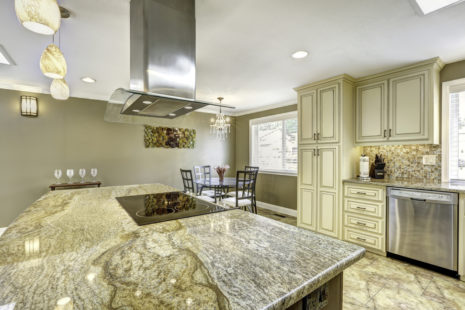
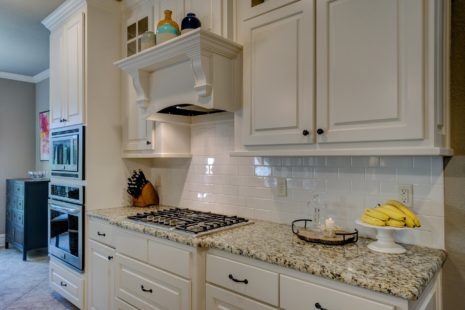
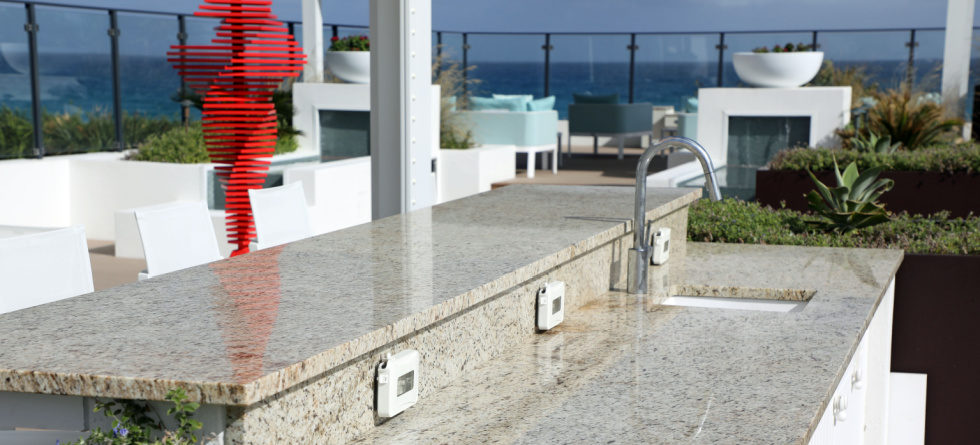
Granite has earned its reputation as the gold standard for outdoor kitchen countertops through proven performance across diverse climates. Its exceptional density and hardness resist scratching from both use and environmental factors, while its crystalline structure handles temperature extremes without damage. Most granite varieties display excellent UV resistance with minimal fading over years of sun exposure.
While all granite performs relatively well outdoors, some considerations warrant attention. Darker granites can become uncomfortably hot in direct sun, potentially causing minor burns when touched on sunny days. Additionally, granite remains slightly porous, requiring periodic sealing (typically annually) to maintain stain resistance. With proper maintenance, however, granite outdoor countertops commonly deliver 20+ years of service while maintaining their beauty.
Concrete countertops offer unmatched design flexibility for outdoor kitchens while providing excellent durability. Modern concrete formulations incorporate additives that enhance freeze-thaw resistance, reduce cracking potential, and improve overall performance. The ability to create seamless, custom shapes makes concrete particularly valuable for unique outdoor layouts that might challenge slab materials.
Several factors influence concrete’s outdoor performance. Quality sealing proves absolutely critical, typically requiring reapplication every 1-3 years depending on exposure conditions. Proper reinforcement with fiber or rebar prevents structural cracking, while appropriate curing techniques minimize shrinkage that could lead to surface crazing. When properly executed by experienced fabricators, concrete countertops handle outdoor conditions beautifully while offering design possibilities no other material can match.
Porcelain has emerged as a leading contender for outdoor applications, particularly in large-format slab forms now available from several manufacturers. These ultra-dense ceramic surfaces offer virtually zero water absorption, excellent UV stability, and remarkable resistance to both staining and scratching. Modern manufacturing techniques create porcelain slabs resembling natural stone, industrial metals, or minimalist solids while delivering superior technical performance.
The primary consideration with porcelain involves proper support and installation. As a relatively rigid material, it requires full underlayment support to prevent cracking from impact. Additionally, special edge treatments or mitered construction techniques address the material’s visible core, which differs from its surface appearance. When properly installed, porcelain may offer the best combination of aesthetics and performance among outdoor countertop options.
Quartzite (natural stone, not to be confused with manufactured quartz) provides exceptional hardness and durability for outdoor applications. This metamorphic stone contains primarily quartz minerals compressed through natural processes, creating surfaces that resist scratching, heat damage, and general wear remarkably well. Certain quartzite varieties display spectacular patterns resembling marble but without marble’s susceptibility to etching and staining.
Like granite, quartzite requires periodic sealing to maintain its stain resistance. It typically costs somewhat more than granite due to limited availability and challenging fabrication requirements, but its performance justifies the investment for many homeowners seeking natural materials with minimum maintenance requirements.
Specialty outdoor-rated quartz products have recently entered the market, addressing the limitations that make standard quartz unsuitable for outdoor use. These modified formulations incorporate UV-stable resins and special manufacturing techniques to overcome the yellowing and potential degradation that typical quartz experiences with sun exposure. While promising, these products have relatively short track records compared to proven natural stone options, and many manufacturers offer more limited warranties for outdoor applications.