Painted vs. Stained Kitchen Cabinets: Which Is Better?
Walk into any kitchen showroom and you’ll face this question within the first five minutes. Do you go with a clean, painted finish — crisp white, soft gray, or a bold color — or do you let the wood speak for itself with a rich, warm stain?
It sounds like a style preference, and it partly is. But the two finishes also behave very differently over time, cost differently, and hold up differently in a real working kitchen. Getting this wrong isn’t just an aesthetic regret — it’s a daily one.
Here’s everything you need to know before you decide.
The Core Difference: What Each Finish Actually Does
This is the most important thing to understand before anything else.
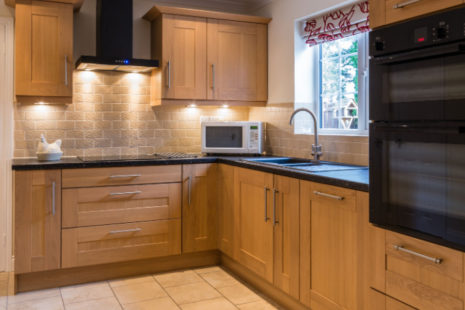
The biggest aesthetic indicator of stained cabinetry is that the wood’s natural grain pattern and texture remains visible. Stains seep into the cabinet door surface and provide a translucent
finish — the knots and grains of the wood species stay prominently on display.
Paint works the opposite way. It sits on top of the wood as an opaque layer, completely
concealing the grain and giving you a smooth, uniform surface in whatever color you choose.
Neither is better. They’re just genuinely different products delivering genuinely different results. The right one depends entirely on your home, your lifestyle, and your priorities.
The Case for Painted Cabinets
Painted cabinets dominate modern, contemporary, and transitional kitchens — and for good reason. They offer something stain simply cannot: complete control over color.
If you’re thinking of tranquil teal, submarine yellow, or lipstick red for your kitchen, look to painted cabinets. Paint sticks to the surface of wood, so it doesn’t get lost in the mix of grains and knots the way a stain does. As a result, paint showcases whichever hue you select.
They also work beautifully with MDF (medium-density fiberboard) — the engineered wood product that many cabinet manufacturers use as a cost-effective substrate. MDF takes paint well. Whether it’s a gray, white, or cream color, it’s nearly impossible to tell the difference
between MDF and real wood when cabinets are painted. This matters because using MDF with a painted finish can actually bring cabinet costs down significantly.
Painted cabinets also make kitchens feel brighter and more open — especially in lighter colors. A recent study by HomeLight found that over 60% of real estate agents recommend white, pale gray, or greige for kitchen cabinets to optimize a property’s resale value.
The real drawbacks of paint:
Painted finishes provide better initial protection against dings and scratches, but damage becomes highly visible once it occurs. A chip on a white painted cabinet is hard to ignore. Touch-ups can also be tricky — spray-applied factory finishes are difficult to match exactly with a brush-applied repair.
In a five-piece door design, the individual pieces of wood naturally expand and contract with temperature and humidity changes. That movement can cause paint finishes to crack,
particularly at the door joints — and those cracks are much more obvious on painted cabinets than on stained ones.
Lifespan is shorter too. Painted cabinets typically last 5 to 10 years given the amount of moisture or damage they may be exposed to.
The Case for Stained Cabinets
Stained cabinets bring warmth, character, and a sense of craftsmanship that painted finishes rarely replicate. When you invest in quality solid wood — oak, walnut, maple, cherry — staining is what lets that investment actually show. ????
Stained cabinets naturally conceal damage better due to their inherent color variations and character. A small scratch on a stained walnut cabinet blends in. The same scratch on a painted white cabinet stands out immediately. For families with kids, that’s not a small
consideration.
Touch-ups are also far more forgiving. Repairing small scratches or imperfections is much
easier with stained cabinets. Stain blends well when applied to damaged areas, and finding an exact match isn’t as big of a concern as it is with paint.
The lifespan advantage is significant. Stained cabinets can last up to 30 years, and they won’t show as many signs of wear and tear as painted cabinets.
The honest drawbacks of stain:
Stain shows nearly all of wood’s blemishes. Some say blemishes; others say character. Stains take a back seat to the wood they’re applied to, which allows every distinct feature to show — for better or worse.
Color options are more limited. You’re working in the range of natural wood tones — from light honey to deep espresso — with some specialty options in between. You won’t achieve a true navy blue or sage green with stain alone.
Dark stains also show dust more readily than lighter finishes, which means more frequent cleaning in kitchens with high foot traffic.
And stain doesn’t work well with MDF. If your cabinet boxes are MDF and you want stain, you’ll need to upgrade to solid wood or wood-veneer doors — which adds cost.
Cost Comparison: The Real Numbers
The cost difference between paint and stain is more nuanced than most people expect.
Painted wood cabinets are typically 10% to 15% more expensive than stained wood cabinets when comparing the finishes themselves side by side on the same wood species.
But the substrate matters enormously. Paint is only more expensive than stain when compared as stand-alone products. When it comes to cabinetry, there are always other variables. Pairing MDF doors with a custom paint color may still end up being cheaper than matching costly walnut doors with a standard stain. The price of the wood species can overshadow the price of the finish entirely.
For refinishing existing cabinets, here’s what real-world projects cost:
| Finish Option | Professional Refinishing Cost | DIY Feasibility | Time to Complete |
| Painting (professional) | $2,000 – $5,500 | Moderate (messy, prep-heavy) | 1–2 weeks |
| Staining (professional) | $1,800 – $4,500 | Harder — requires full stripping | 1–3 weeks |
| Repainting existing painted cabinets | $6,000 – $11,600 | Possible with prep | 1–2 weeks |
| Re-staining existing stained cabinets | $7,000 – $15,000 | Very labor-intensive | 2–4 weeks |
Sources: Mint Cabinet Refinishing, LaMont Bros. 2025
Staining demands complete stripping and sanding of surfaces, making it approximately 30% more labor-intensive than repainting. That’s why restaining existing cabinets costs more than repainting them — even though stain as a product is cheaper than paint.
Side-by-Side Comparison: The Full Picture
| Factor | Painted Cabinets | Stained Cabinets |
| Color options | Virtually unlimited | Limited to wood tones + some specialty |
| Grain visibility | Hidden completely | Fully visible — enhanced |
| Lifespan | 5–10 years typical | Up to 30 years |
| Damage visibility | High — chips and scratches show clearly | Low — blends into natural variation |
| Touch-up ease | Difficult — exact match required | Easy — stain blends naturally |
| Works with MDF | Yes — paint thrives on MDF | No — requires solid wood or veneer |
| Maintenance | More frequent cleaning needed | Less frequent, easier to maintain |
| Cost (finish only) | 10–15% more than stain | Lower — but wood cost may offset |
| Best kitchen style | Modern, contemporary, transitional | Traditional, rustic, farmhouse |
| Resale flexibility | Broad appeal in neutral colors | Strong in traditional/classic markets |
What Holds Up Better Over Time: The Durability Reality
This is where stain has a genuine, measurable edge — and homeowners don’t always hear it clearly enough.
Painted finishes provide better initial protection against dings and scratches. But once damage occurs, it’s highly visible. Stained cabinets absorb the evidence of a busy kitchen far more graciously.
Stained cabinets require minimal long-term maintenance, meaning they will maintain their great look even after years of use. Painted cabinets, particularly in high-humidity kitchens, are susceptible to chipping, peeling, and yellowing over time — especially near the dishwasher, sink, and cooktop.
Painted cabinets are more susceptible to chips and nicks compared to stained wood, which develops a naturally worn look over time.
For families with young children, pets, or a genuinely busy kitchen, stain is the more forgiving long-term choice. For homeowners who are meticulous about kitchen care and value a clean, bright aesthetic — painted is absolutely achievable and can look stunning for years with the right maintenance habits.
The Resale Value Question
If you’re planning to sell within the next few years, this deserves its own section.
According to the National Association of Realtors, 70% of buyers prioritize the kitchen above all other rooms. Among these, 80% report that new or refreshed cabinets are a top draw. Zillow research shows that homes with newly painted cabinets sell for an average of 2% more than those without.
Home appraisers measure the condition and appearance of kitchen cabinets as a direct factor in a home’s appraisal. A clean, bright kitchen with freshly painted cabinets gives buyers the impression that your home has been well cared for.
That said, stained cabinets in a traditional or classic home can be just as compelling — or more so. If your cabinets are made from a beautiful hardwood with rich grain patterns, staining showcases the natural character of the wood, which some buyers specifically appreciate. In homes with a classic or traditional architectural style, stained cabinets might be a better stylistic fit.
The safest bet for maximum resale appeal? Neutral tones — white, soft gray, and greige — are the colors most likely to appeal to the widest range of buyers. Whether those neutrals come through paint or a light, warm stain, it’s the finish quality and color choice that matter most — not which product category you chose.
The Best of Both: Two-Tone Cabinets
Can’t decide? You don’t have to.
Two-tone cabinetry has become a popular design choice — combining white wall cabinets with navy blue base cabinets, or installing an accent-colored island. Since finding complementary stain combinations can be challenging, pairing two different paint colors or
combining paint on upper cabinets with stain on lower cabinets is a well-established approach.
This gives you the brightness of paint up top and the warmth of natural wood at eye level — a combination that works exceptionally well in transitional and farmhouse-style kitchens.
Which One Is Right for You?
Run through these honestly:
- If your home is modern or contemporary and you want maximum color flexibility — paint is your answer
- If you have quality solid wood cabinets and want their character to show — stain is the obvious choice
- If you have young children and a genuinely active kitchen — stain will age more gracefully
- If you’re selling within five to seven years and want broad buyer appeal — painted in a neutral tone wins on versatility
- If your home is traditional or farmhouse-style — stain feels natural and authentic
- If your cabinets are MDF — paint is the only sensible option
There’s no objectively superior finish. There’s only the right finish for your kitchen, your life, and your goals
Let’s Help You Get It Right
This is one of those decisions that looks simple on paper and gets complicated fast when you’re standing in a showroom holding paint chips next to wood samples under fluorescent lighting.
Our team works through this exact decision with homeowners every week. We’ll look at your kitchen, your home’s style, your countertop direction, and your lifestyle — and give you an honest recommendation you’ll feel good about for years.
Come visit our showroom, bring photos of your space, or reach out today for a free consultation and quote. The right finish is out there — let’s find it together.